5 Steps on How to Build a Cat Climbing Wall
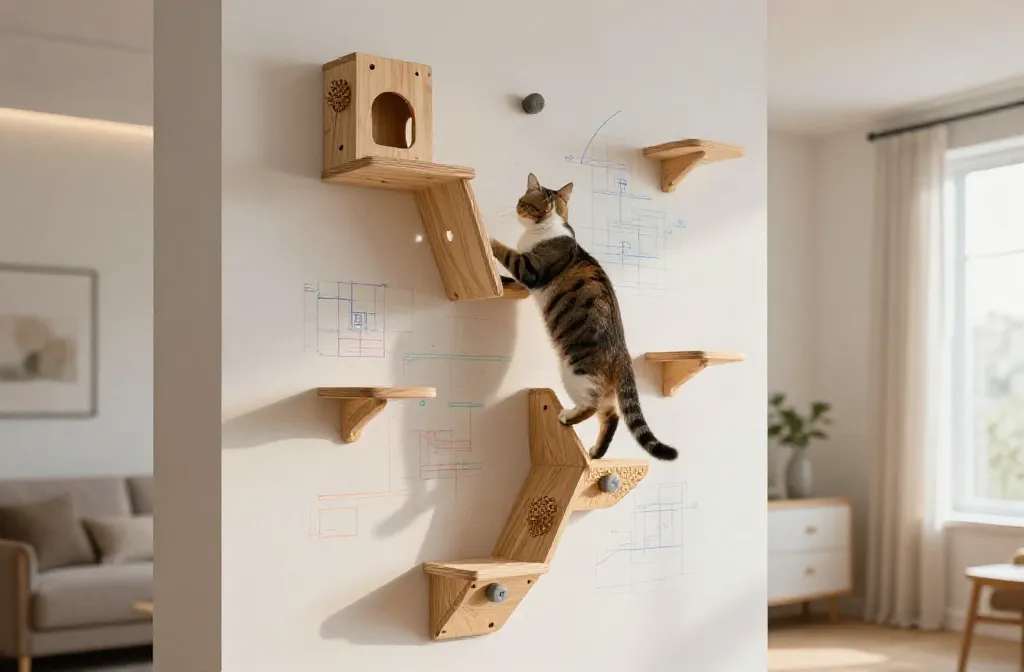
If your cat could rap, this would be their mixtape. Build a wall your furry friend can scale with gusto, and you’ll get endless zoomies, fewer furniture scratches, and a tiny furry gymnast as your new room mascot. FYI, this is easier than you think.
1. Plan the Playground: Sketch, Size, and Smackdown of Space
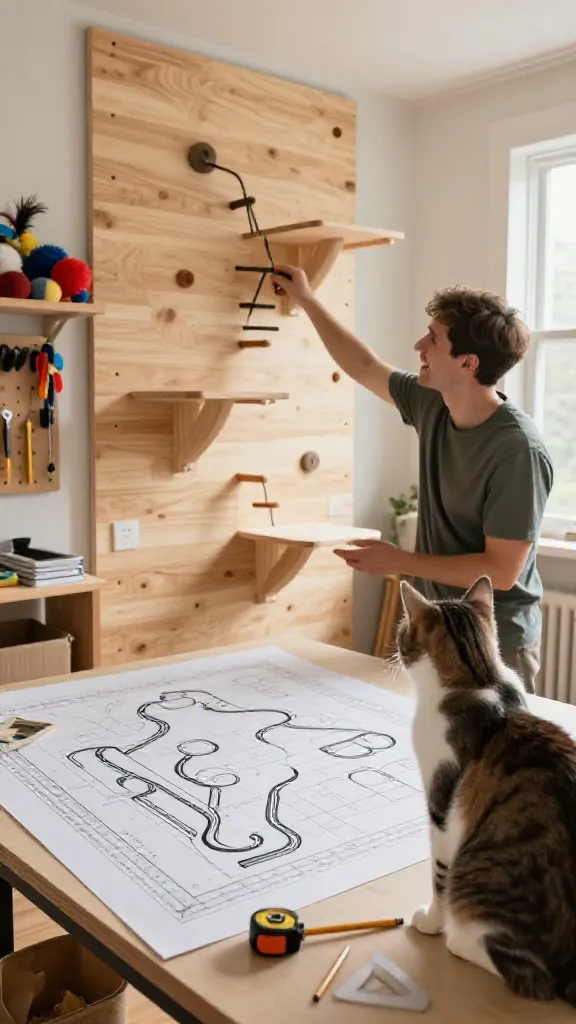
Before you dive into screws and fur, map out where the wall will live and how big it should be. A good plan saves you from a wobbling catastrophe and a cat staring judgmentally at your DIY skills.
Think about height, width, and the kind of routes your cat prefers. Do they love creeping up narrow spines or leaping across wider steps? The right layout keeps them engaged and avoids ceiling-crash scenarios.
Key Points
- Choose a sturdy wall with access to outlets and a nearby toy stash for motivation.
- Decide on 3–6 grip levels with varied angles for challenge.
- Leave space underneath for mats or a soft landing.
Starting with a clear blueprint helps you pick the right materials, angles, and mounting approach. Trust me, drawing a quick plan saves heartache later.
2. Choose the Right Materials: Wood, Grips, and Honest Durability
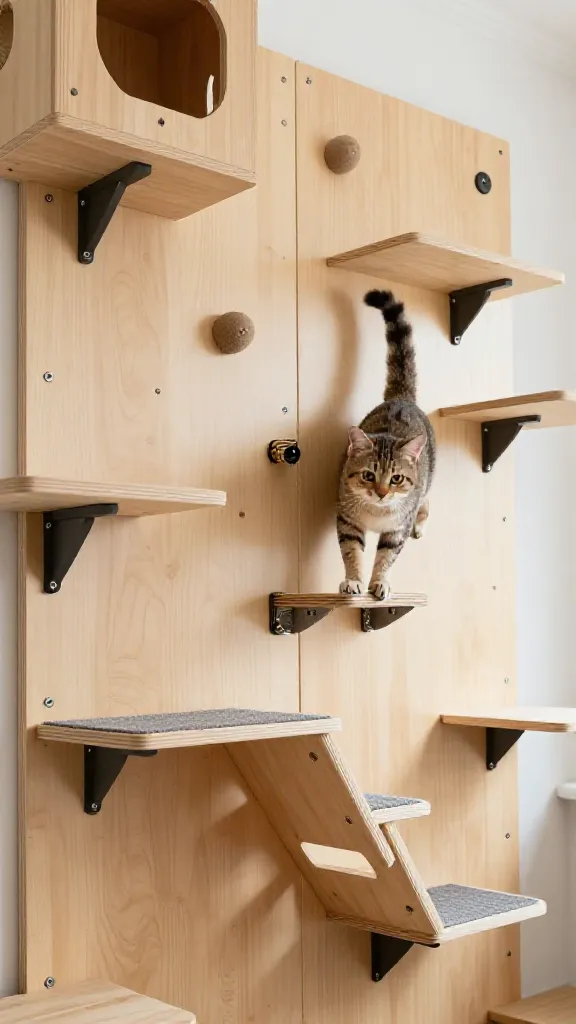
Your cat doesn’t care about fancy, they care about grip and stability. Picking the right materials makes the wall non-slip, safe, and endlessly interesting.
Go for durable, lightweight woods like plywood or MDF for panels, with solid mounting hardware. Add grip textures that cats actually like—think carpet strips, sisal rope, or textured vinyl for traction. Replace flimsy stuff with resilient materials that won’t wobble after a few weeks of zoomies.
Materials Snapshot
- Plywood or MDF panels (3–4 mm thick minimum)
- Grip options: carpet strips, sisal rope, or anti-slip vinyl
- Sturdy mounting hardware: lag bolts, wall anchors, a stud finder
Pro tip: test grip surfaces with your finger first—if you can slide, your cat will slide too, and not in a fun way. FYI, safety first is not just a vibe; it’s a lifestyle.
3. Install with Confidence: Secure Mounts and Smart Angles
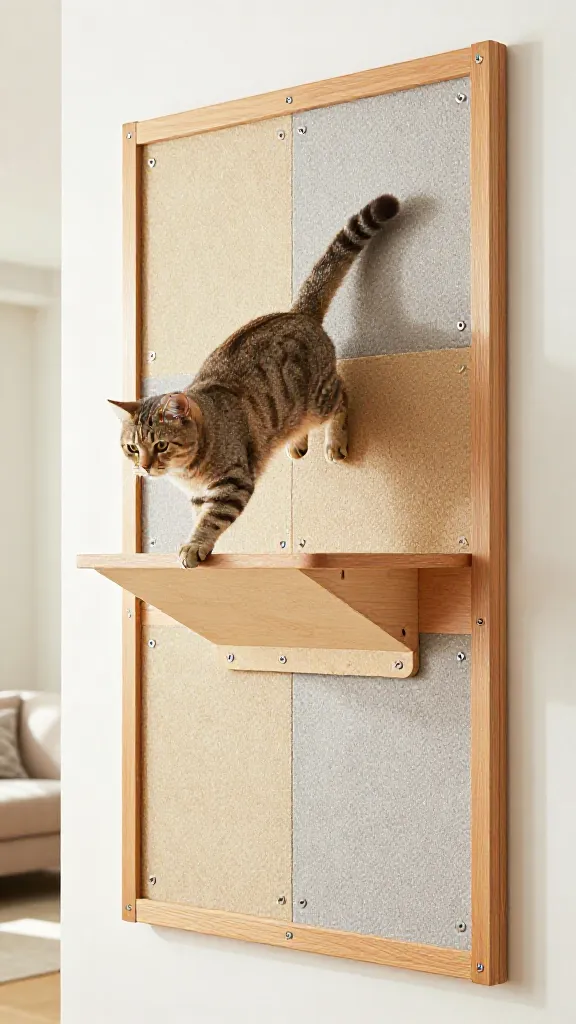
If you want a wall that doesn’t come crashing down the moment a cat decides to leap, you need solid installation. Put those fancy tools to work and make sure every panel is secure.
Angles matter. A mix of flatter and slightly inclined panels invites exploration without frustrating your cat’s muscles. Don’t forget to anchor into studs or use strong wall anchors. A wobbly wall is the fastest way to lose a cat’s trust—and your sanity.
Steps to Success
- Locate studs and mark mounting points with a pencil.
- Pre-drill holes to prevent wood splitting.
- Mount panels with generous screws; avoid over-tightening to prevent warping.
Bottom line: a rock-steady wall equals happy whiskers and fewer dramatic mid-climb detours. Seriously, stability saves lives (okay, not literally, but it saves furniture and nerves).
4. Add Flair and Fun: Textures, Hiding Spots, and Interactive Elements
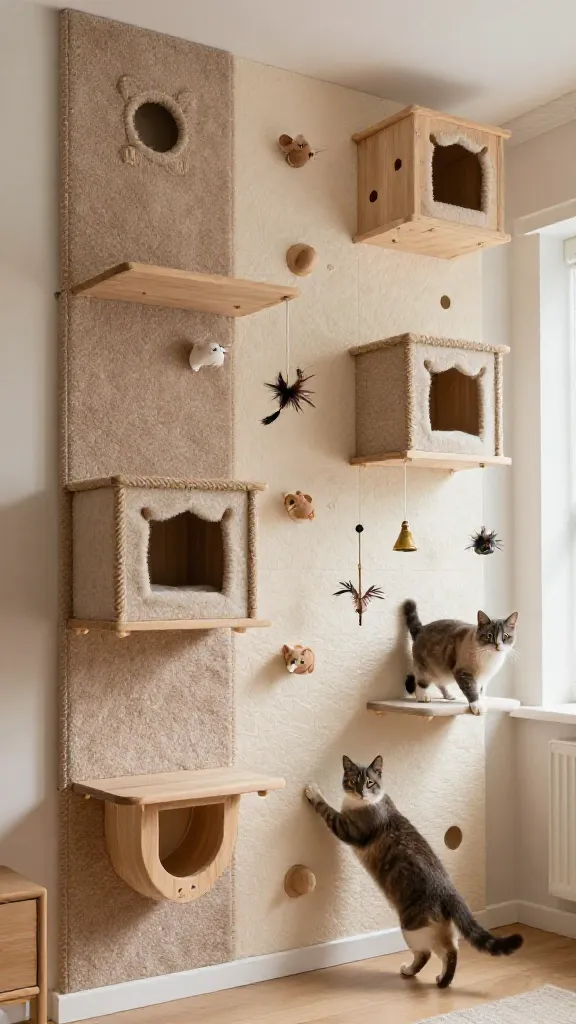
Now for the fun part: making the wall irresistibly engaging. A cat loves surprises, different textures, and little recesses to explore. Mix things up so your feline friend never gets bored.
Think about alternating textures, adding tiny shelves, and placing a few hanging toys along the path. You can also create faux ledges that resemble small balconies for dramatic zoomies.
Tips for Maximum Fun
- Alternate textures: carpet, rope, and smooth vinyl on different panels.
- Incorporate small cubbies or shelves for resting spots between climbs.
- Place a dangling toy at the top of a route to reward the ascent.
Benefits: keeps the cat mentally engaged, exercises their claws, and gives you a whimsical feature in your space. IMO, this turns DIY time into playtime for both of you.
5. Safety Check and Maintenance: Keep It Fresh and Cat-Safe
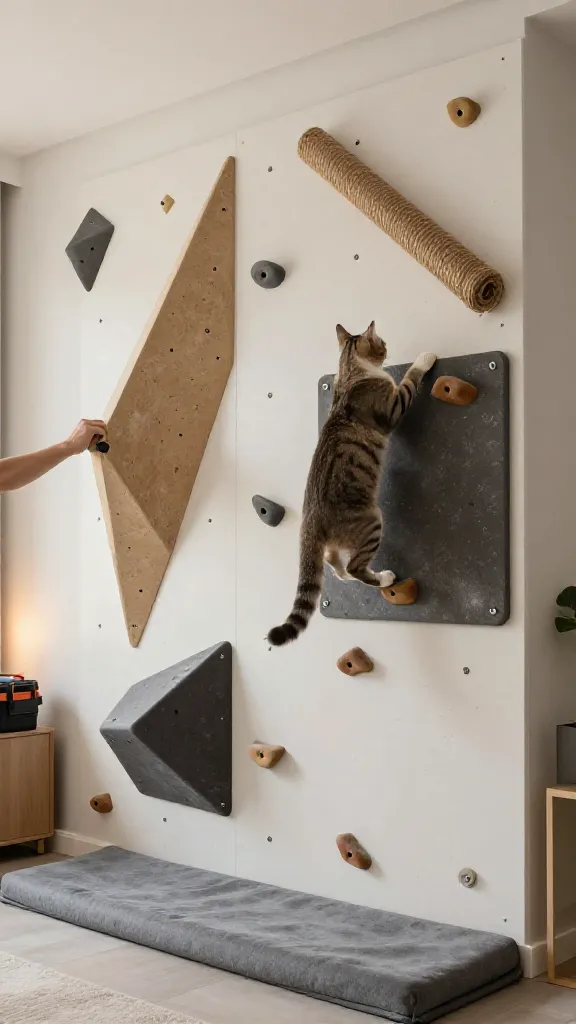
You’ve built something cool—now keep it that way. Regular checks prevent accidents and ensure your cat stays curious rather than discouraged.
Inspect screws, joints, and textures every month or after a big hairball of a workout. Replace worn grip surfaces and re-secure any loose panels. A little upkeep goes a long way in staying safe and glam.
Safety Essentials
- Check for loose screws or wobbly panels monthly
- Replace grip materials showing wear
- Keep the area clear of clutter and ensure soft landings with mats
Using the wall consistently teaches your cat healthy climbing habits and reduces the risk of injuries. Trust me, consistent maintenance pays off in fewer vet visits and more felines conquering towering monuments of cardboard boxes—okay, maybe not, but you get the idea.
Ready to unleash your cat’s inner daredevil? Build, test, and adjust as you go. Your feline friend will adore the adventure, and you’ll finally have a stylish, functional statement piece that doubles as a training ground. FYI, the best part is watching your cat turn into a tiny gymnast right before your eyes.
If you’re itching to start, grab a pencil, a few sturdy panels, and the grip textures that scream “fun.” The wall becomes their personal playground, and you become the genius behind the zoomies. Seriously, you’ve got this.