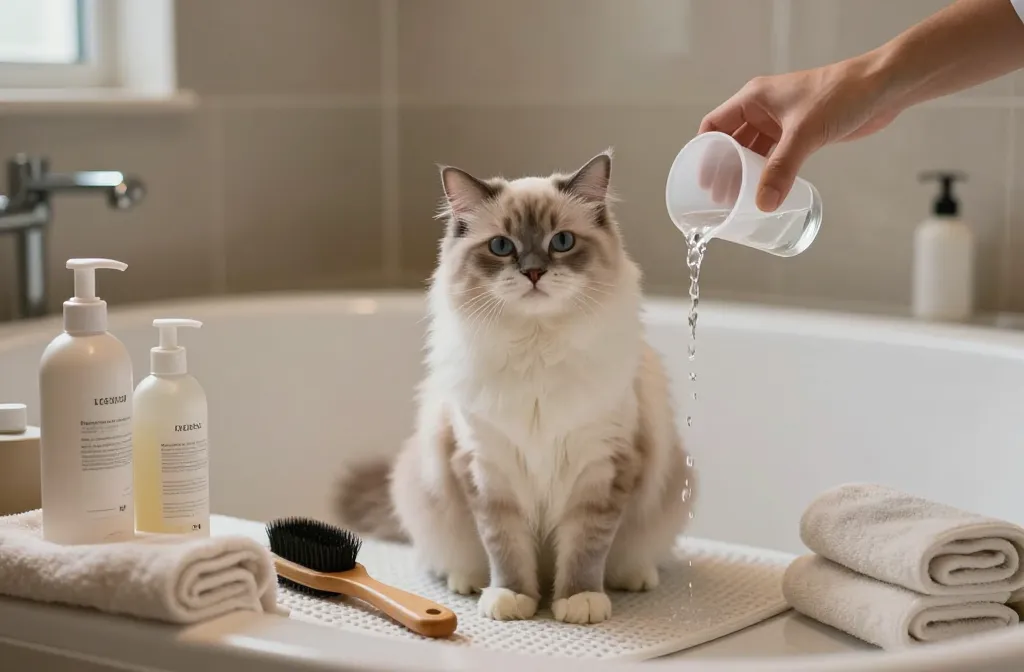
6 Tips on How to Give a Cat a Bath You’Ll Love
Bath time with a feline can feel like a tiny apocalypse. But with the right steps, you can make it smoother, calmer, and maybe even a little adorable. Here are six battle-tested tips to turn bathtub chaos into purrfect results.
1. Prep Like a Pro Before Any Splash
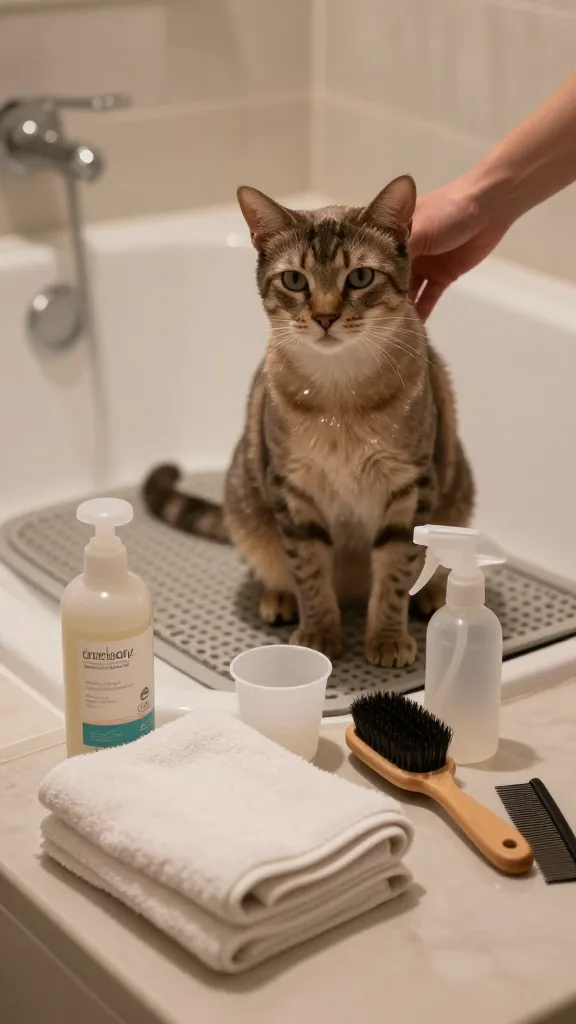
Preparation saves you from chaos and your cat from turning the bathroom into a splash zone. Get everything within arm’s reach so you don’t chase a soggy cat around the house.
What to Gather:
- Cat-safe shampoo (enzymatic formulas are great for odors)
- A non-slip mat for the tub
- Two towels and a small cup or detachable spray
- Brush or comb for fur detangling
Set the scene with dimmed lights and a calm voice. FYI, a calm voice can work wonders—cats respond to consistency and confidence. If your cat tolerates a dryer later, keep it on the lowest setting and distant from their ears.
Benefits: smoother entry, less wrestling, and a much cleaner kitty in less time.
2. Brush First, Then Bath—Trust the Pre-Game Routine
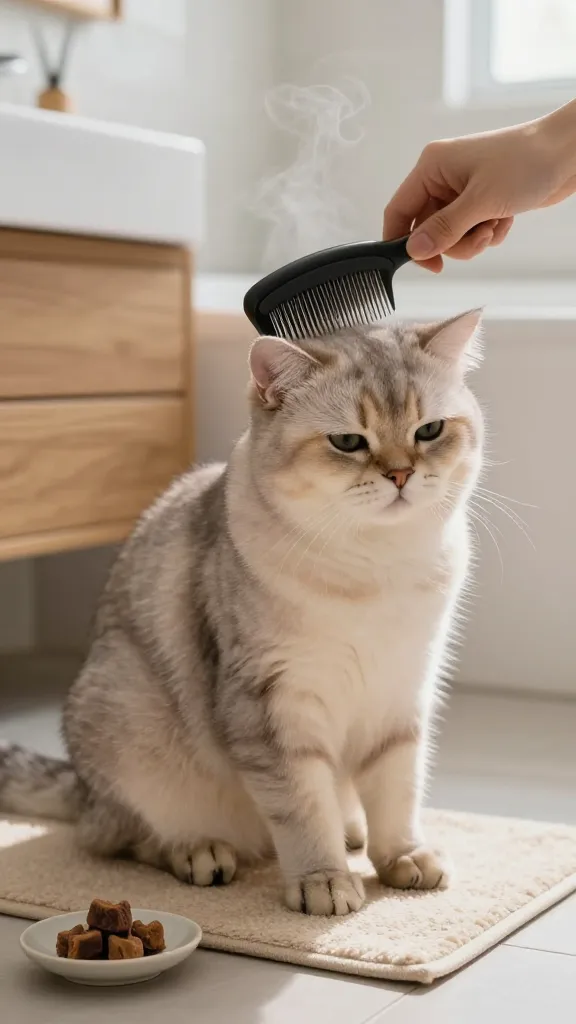
Starting with a good brush removes loose fur and tangles that would otherwise turn into a muddy mop during washing. Plus, it makes your cat feel more in control before the water shows up.
Brush Like a Pro:
- Use a wide-tooth comb for tangles
- Brush in the direction of fur growth
- Reward with a treat after the session
A quick pre-bath brushing reduces hair shedding in the tub and cuts down on rinse time. Bonus: your bathroom won’t resemble a fur storm after you’re done.
3. Temperature and Water: The Gentle Middle Ground
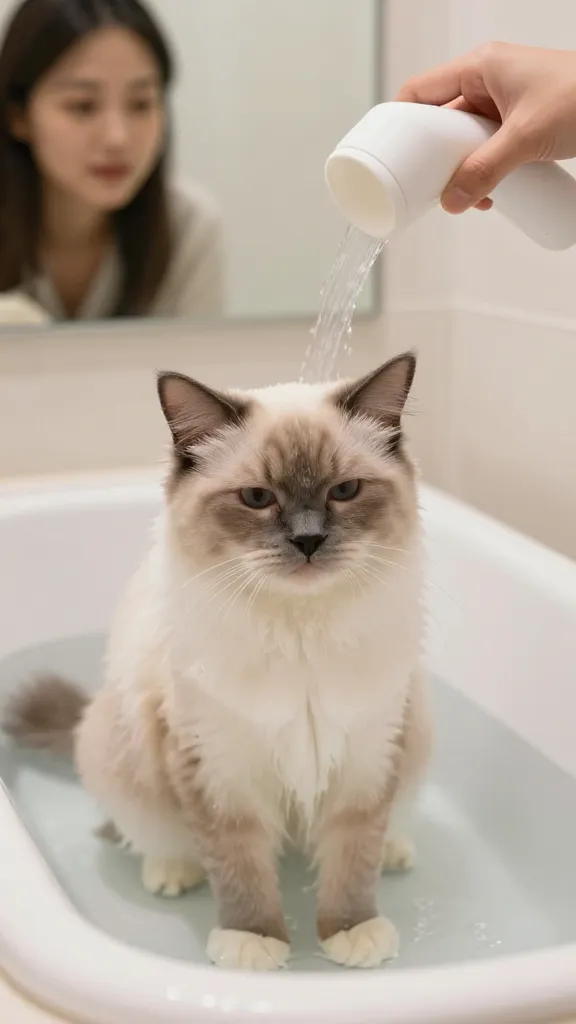
Temperature matters more than you think. Too cold and your cat shivers; too warm and you risk discomfort. Aim for lukewarm water, like a pleasant bath you’d enjoy, not a spa day for a dragon.
Water Tactics:
- Fill the tub shallowly to keep control
- Keep water flow mild to avoid startling splashes
- Use a cup or handheld sprayer for controlled rinsing
Pro tip: avoid spraying directly on the face. If splashes occur, speak softly and reassure them. Trust me, a calm cat is a compliant cat—most of the time.
4. Shampoo Strategy: Gentle, Quick, Effective
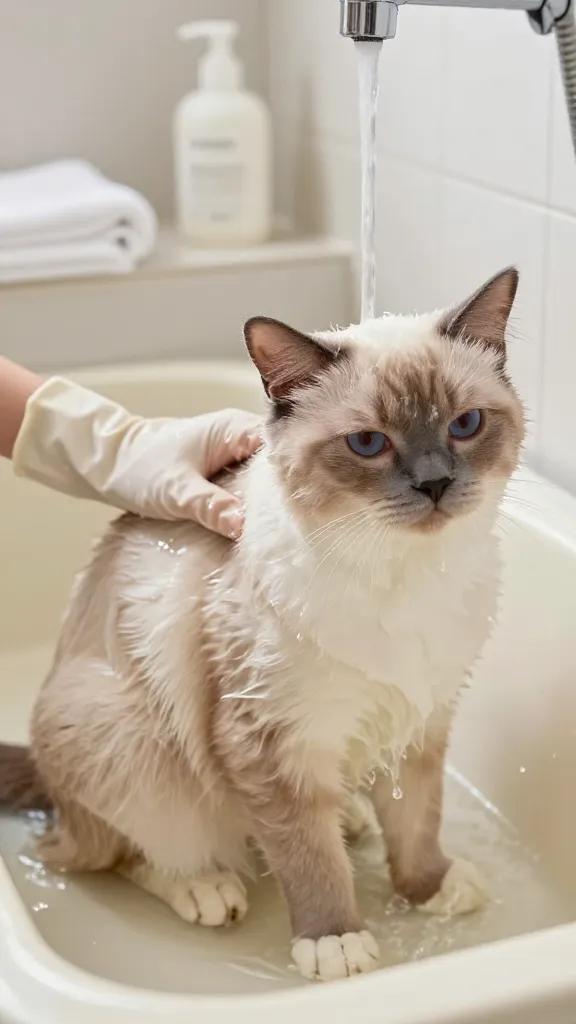
Cats aren’t big fans of baths, but a gentle, efficient wash changes the game. Use a cat-specific shampoo and lather quickly, avoiding the face and ears.
Shampoo Tips:
- Wear short, controlled strokes and keep the water running only above the fur
- Avoid harsh chemicals or over-washing—once is enough in most cases
- Rinse thoroughly with lukewarm water to prevent residue irritation
End with a quick sniff check—if the fur looks clean and there’s no soapy smell, you’re good. FYI, a well-rinsed kitty is a happy kitty and less likely to groom excessive soap into their eyes.
5. Drying and Soothing: Turn Bath Time into Chill Time
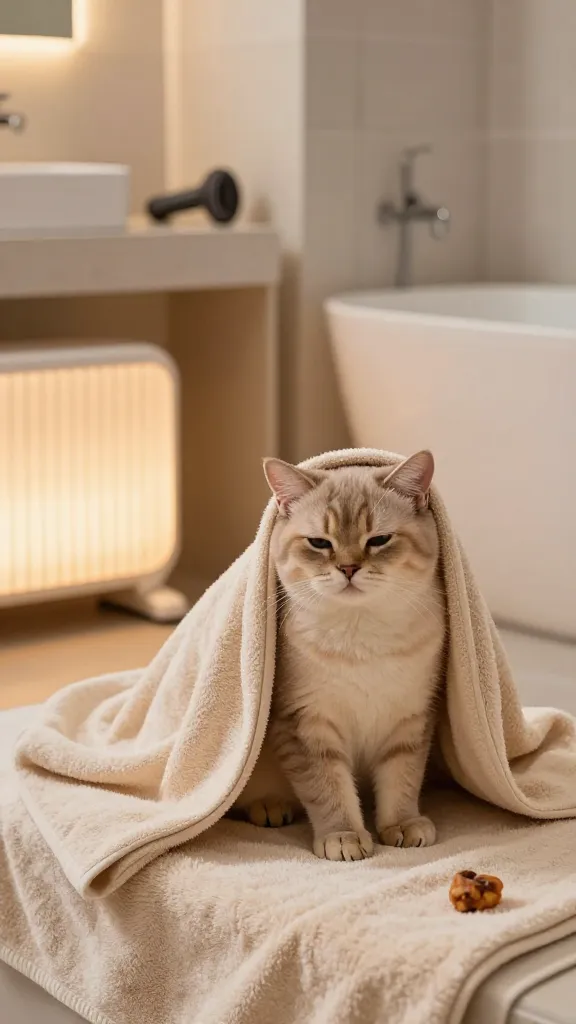
Drying is where you can turn the mood from “I am under siege” to “I can survive this.” Pat gently with towels, avoid aggressive rubbing, and create a warm, cozy space for aftermath calming.
Drying Steps:
- Wrap in a large towel and press gently to remove excess water
- Use a blow dryer on the lowest setting if your cat tolerates noise
- Offer a warm blanket and a treat to reinforce calm behavior
Benefits: less risk of chilling, smoother coat, and a more confident cat for future sessions. Seriously, consistency builds trust faster than you think.
6. Safety, Boundaries, and Follow-Up: Keep It Positive
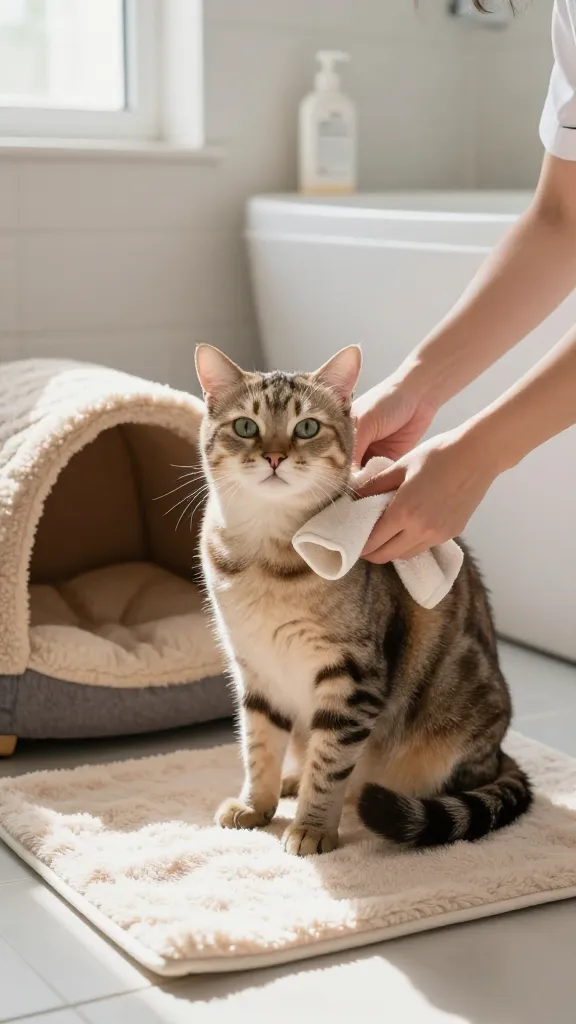
End on a high note and set expectations for future baths. Cats remember how you handle the experience, so aim for a quick, respectful routine that leaves both of you with less anxiety.
Safety Bullet List:
- Never leave a cat unattended in the tub, even for a moment
- Keep shampoos and soaps out of reach when not in use
- Offer a hideaway towel or bed immediately after drying
- Gradually increase tolerance with short, positive sessions if frequent baths are needed
With practice, your cat will associate bath days with predictable steps, not chaos. This is where the real magic happens—the more positive the experience, the less resistant they become over time.
Conclusion: You’ve got this. These six tips are your roadmap to a calmer bath and a cleaner cat. Start small, celebrate progress, and watch your feline become a little more cooperative every time you say “bath time.”